
Criminal Cases in Calcasieu Parish Courts
The Calcasieu Clerk of Court Criminal Records Department preserves cases filed in the Fourteenth Judicial District Court, or 14th JDC. That court hears felony and other district-level matters. A district file may contain the bill of information or indictment, minutes, motions, settings, plea or verdict, judgment, and sentence. The clerk is the record custodian, while the district attorney prosecutes the charge and the sheriff may hold the separate booking record.
Lake Charles City Court and Sulphur City Court keep their own misdemeanor and traffic dockets. Those records do not migrate into the parish clerk's collection merely because an arrest occurred in Calcasieu Parish. Start with the court named on a citation, bond paper, notice, or docket number. If that clue is missing, identify the arresting agency and ask whether the case was filed in a city court or the 14th JDC.
Calcasieu Parish Criminal Online Index
The clerk's Online Search Services page is the official entrance to the Criminal/Online Index. It requires registration or a subscription account. A fee change effective July 1, 2025 sets document images at $1 per page for all account types. The public landing page shows login and new-user controls, but the actual criminal query is behind authentication. Do not assume an unseen dropdown or search option exists.
The official criminal-records page provides a useful view of the local filing system.
View the clerk's criminal-records source before using the image below.
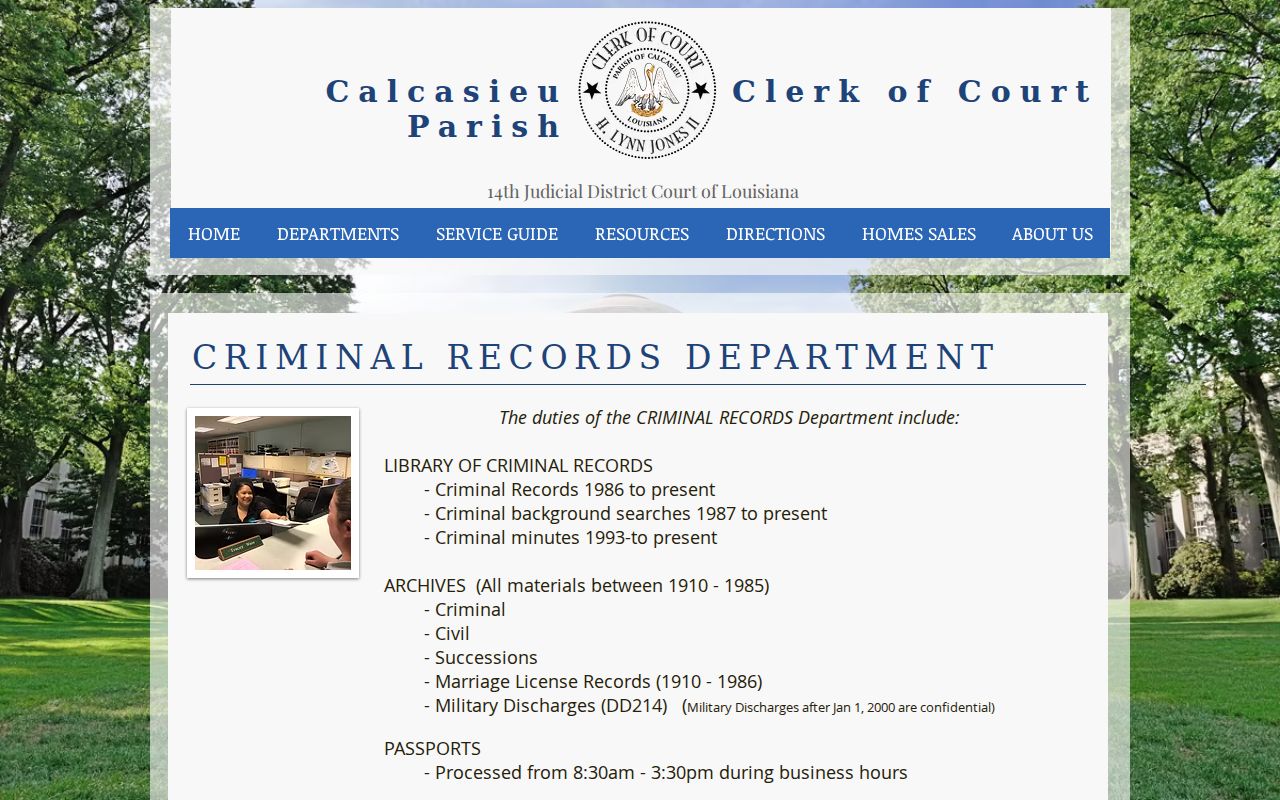
The source confirms that the parish clerk, rather than the sheriff's roster, is the place to verify filed district charges and outcomes.
How to Search Calcasieu Parish Case Records
Use the case number when available. Otherwise, give the clerk enough identity and date detail to separate people with similar names. The criminal-record request route asks for the defendant's name, date of birth, charge or charges, and year or approximate year. Anyone may request a search, but the result covers 14th JDC records, not every parish arrest.
- Open the clerk's Criminal/Online Index and register or sign in for district records.
- Search with a full legal name or case number, adding date of birth and year when known.
- Review the docket, charge description, minutes, and settings without treating a pending count as a finding of guilt.
- Ask Criminal Records for help if spelling variants, an old year, or an offsite file defeats the online search.
- Request plain or certified copies from the court that holds the case, including a city court when the district index returns no result.
| Field Label | Type | Required | Notes |
|---|---|---|---|
| Defendant's name | Text | Expected | Use the full legal name and test known variants. |
| Date of birth | Date or text | Expected | Helps distinguish similar names; copies may redact it. |
| Charge | Text | If known | The filed count may differ from the arrest wording. |
| Year | Year or text | Expected | Directs a modern, offsite, or archive search. |
| Account credentials | Login | Online only | Registration or subscription is required. |
See the official request instructions represented below.
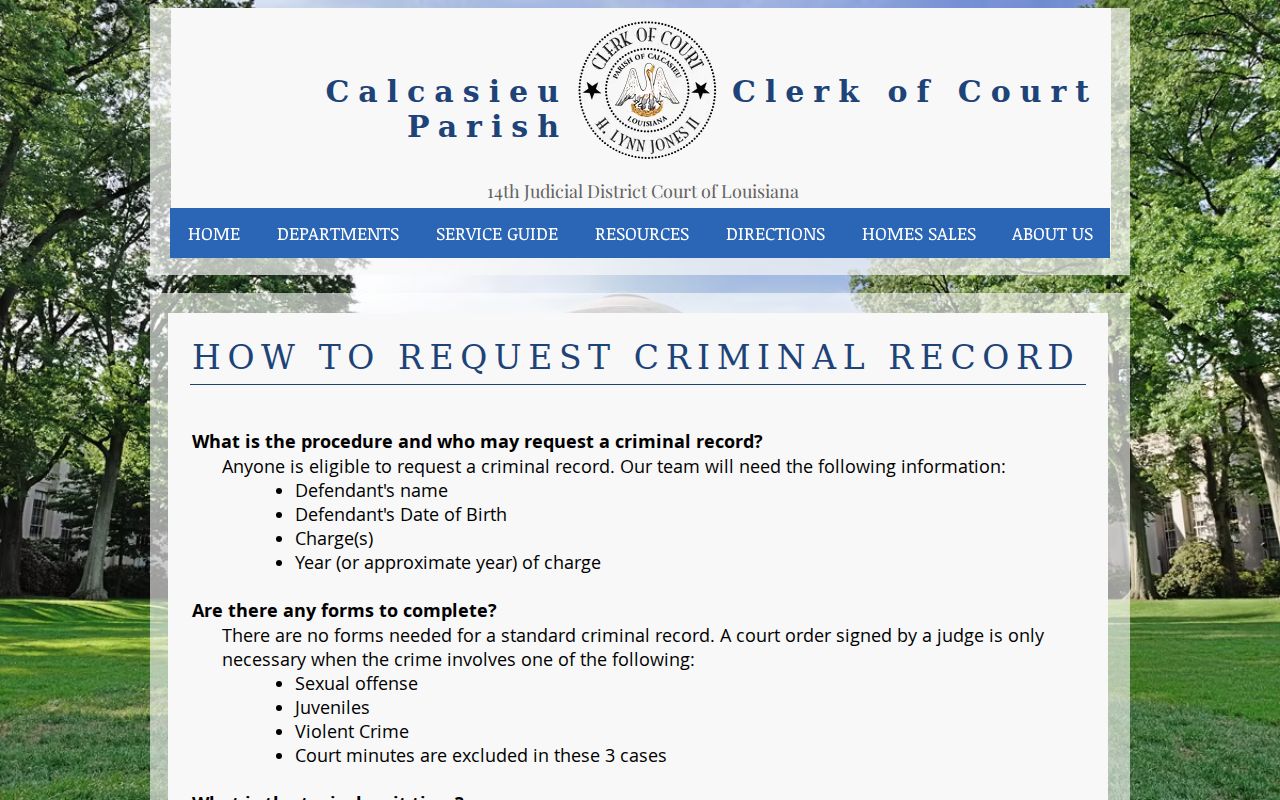
The request channel is the practical fallback when a name search is unclear or the desired file is not available online.
Calcasieu Criminal Minutes and Archives
Calcasieu Parish has an unusually clear record chronology. The modern criminal library begins in 1986, criminal minutes begin in 1993, and archives cover 1910 through 1985. A failed online search for an older prosecution is therefore a routing clue, not proof that no case exists. Supply the approximate year and ask the archives desk to identify the right collection.
Retrieval time also depends on location. The clerk estimates about five to ten minutes for a file held locally and about three days for an offsite file. Plan around that distinction when a certified judgment or disposition is needed. Criminal Records can be reached at 337-437-3558; the archives extension is 193.
Review the clerk's online-service options shown in this captured source.
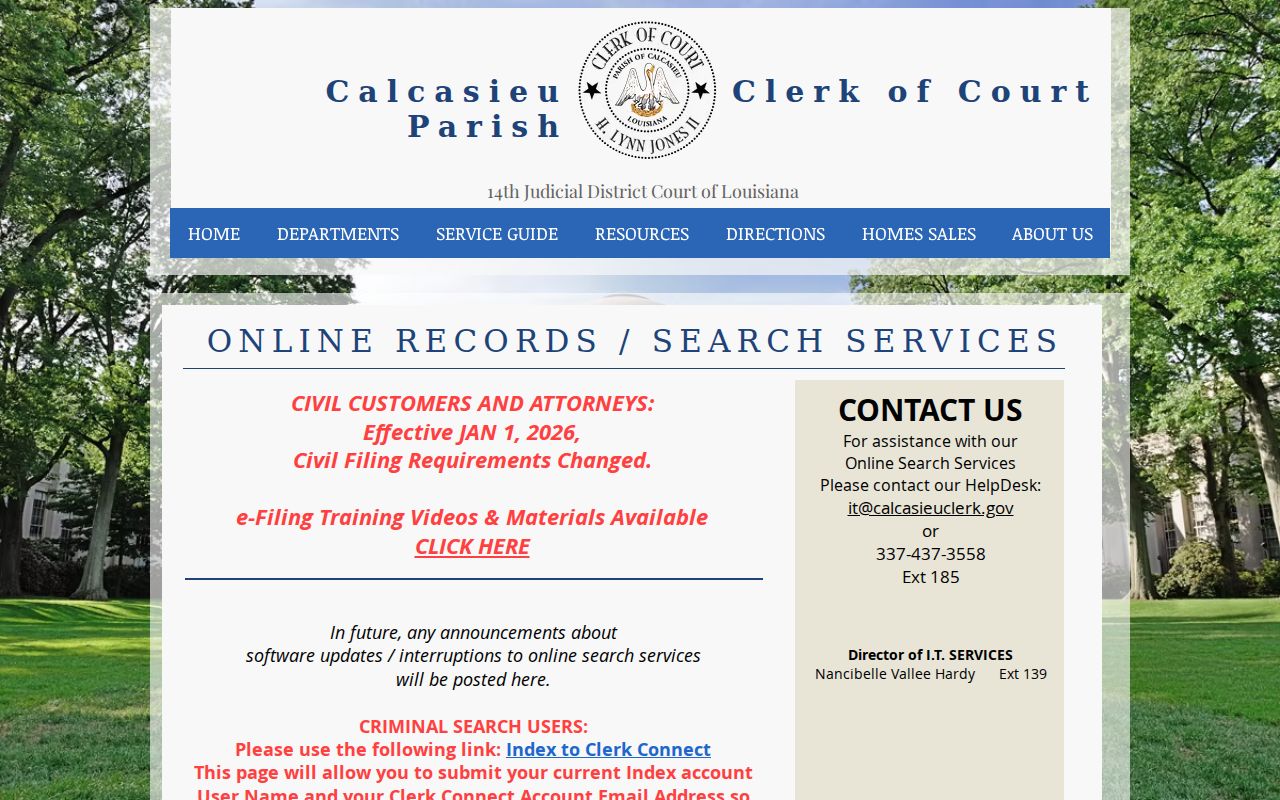
The account gateway serves modern remote access, while staff assistance remains vital for offsite and archival court records.
What Calcasieu Parish Case Files Show
A court file is organized around one prosecution and docket number. It can resolve questions that a booking record cannot, such as whether the prosecutor changed the charge, whether a count was dismissed, how the defendant pleaded, and what sentence the judge imposed. Read the latest minutes and signed judgment with the charge list because an early docket entry may not state the final result.
| Case Number and Court | Identifies the docket and whether the matter belongs to the 14th JDC or a city court. |
|---|---|
| Charging Document | States the offense formally filed by information or indictment. |
| Docket Entries | Chronologically list filings, motions, notices, and court action. |
| Hearing Dates | Show settings for arraignment, motions, trial, or sentencing. |
| Disposition and Judgment | Records dismissal, acquittal, plea, verdict, and the court's final ruling. |
| Sentence and Conditions | States custody, probation, fines, or other terms imposed by the court. |
City Cases Missing from Calcasieu Search
A no-result message from the parish clerk can be accurate yet incomplete. Lake Charles City Court preserves its own DWI, traffic, and misdemeanor criminal files. Sulphur City Court does the same for its jurisdiction. Ask the issuing city court when paperwork names it or when police confirm that the prosecution stayed at the city level.
Lake Charles City Court uses a public-records request form and directs criminal requests to its Criminal Clerk at 337-491-1565. Its policy sets a $5 minimum for certified traffic or criminal copies, $25 for a recording that includes a CD, and the court reporter's rate for transcript pages. It also redacts another person's Social Security number, driver's license number, and date of birth. Translation services are available in DWI, traffic, and misdemeanor criminal proceedings.
Stages of Calcasieu Parish Criminal Cases
After an arrest or summons, the court addresses appearance and bond while the prosecutor reviews the facts. A bill of information or indictment sets the filed charge. Arraignment records the plea. Discovery and motions follow, and the matter ends through dismissal, plea, or trial. Sentencing and any appeal create later entries. Time varies by case, so a scheduled date is not a promised completion date.
Case flow: Charges Filed › Arraignment › Pretrial › Plea or Trial › Disposition › Sentencing
The arrest record is only the start. For booking context before the filed count appears, consult Calcasieu Parish arrest history records, then return to the correct clerk for the outcome.
Reading Calcasieu Criminal Dispositions
“Dismissed” or “nolle prosequi” means prosecution ended on that count without a conviction. It does not erase the arrest or booking. “Not guilty” or “acquitted” is a decision for the defendant after adjudication. “Guilty” may follow a plea or verdict. A bench warrant or attachment is a court order, often tied to failure to appear, rather than a new conviction.
- Nolle prosequi
- The prosecutor ended the count without a conviction.
- Disposition
- The recorded outcome of a filed count.
- Article 893 or 894 language
- Set-aside language that may affect eligibility but is not a completed expungement.
- Probation revoked
- A post-sentence ruling that probation terms were violated.
The Calcasieu District Attorney also offers a free disposition letter. That letter can help reconcile an incomplete BCII history, but a certified court record remains the direct proof of the judgment.
Calcasieu Parish Specialty Court Layer
The 14th JDC operates Drug Court, DWI Court, Mental Health Court, and Veterans Treatment Court programs. These tracks do not create a separate public criminal-history system. Entries still belong to the underlying district docket, subject to legal restrictions on treatment, health, and protected information. A program completion can change the course of a case, but it should not be described as automatic deletion from every custodian.
When an entry uses program or probation language, ask for the signed order and final minute. Those records show what the judge ordered, what was dismissed or set aside, and whether another filing step remains. The docket may show admission, reviews, sanctions, graduation, or termination without disclosing confidential treatment details. Compare each program entry with the charge and judgment. A press announcement or program description cannot establish that one participant earned dismissal, completed probation, or qualified for expungement. Those conclusions require the order in that person's Calcasieu Parish criminal case file.
Calcasieu Parish Case Access Restrictions
Louisiana Public Records Law generally supports access to court dockets and final case records, subject to sealing and redaction. The Louisiana Legislature's Title 44 collection includes the public-access rules and R.S. 44:3 limits for specified investigative and prosecutorial material. Juvenile files, victim and minor identities, Social Security numbers, protected addresses, and some dates of birth may be withheld.
Public access does not override a sealing order, juvenile confidentiality, or statutory protection for an active investigation. Ask the clerk which rule controls a withheld item.
The official Louisiana laws source is captured below.
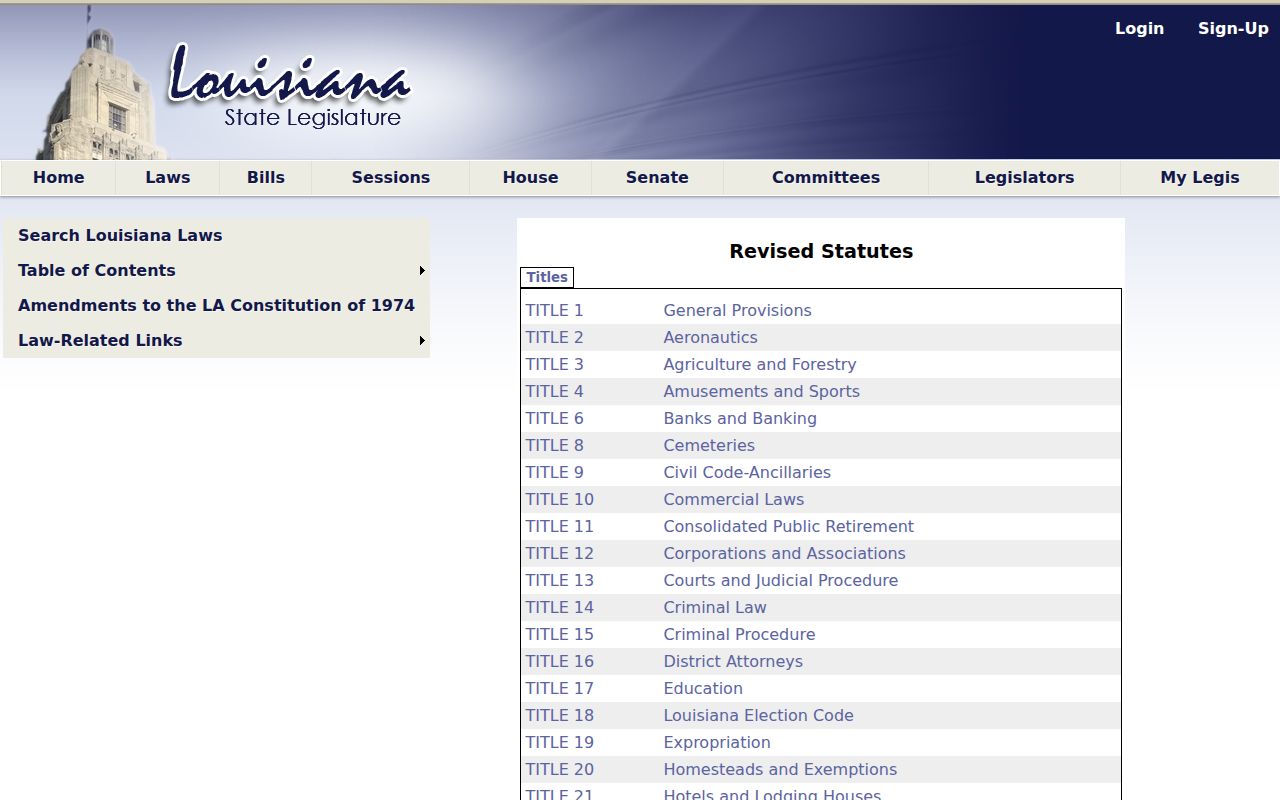
The statutes explain why an open docket may still contain redacted pages or documents unavailable to the public.
The Calcasieu Parish Courthouse is at 1000 Ryan Street, Lake Charles, LA 70601. The clerk's public hours are Monday through Friday, 8:30 a.m. to 4:30 p.m. Call Criminal Records before a time-sensitive trip, especially for an archive or offsite file.